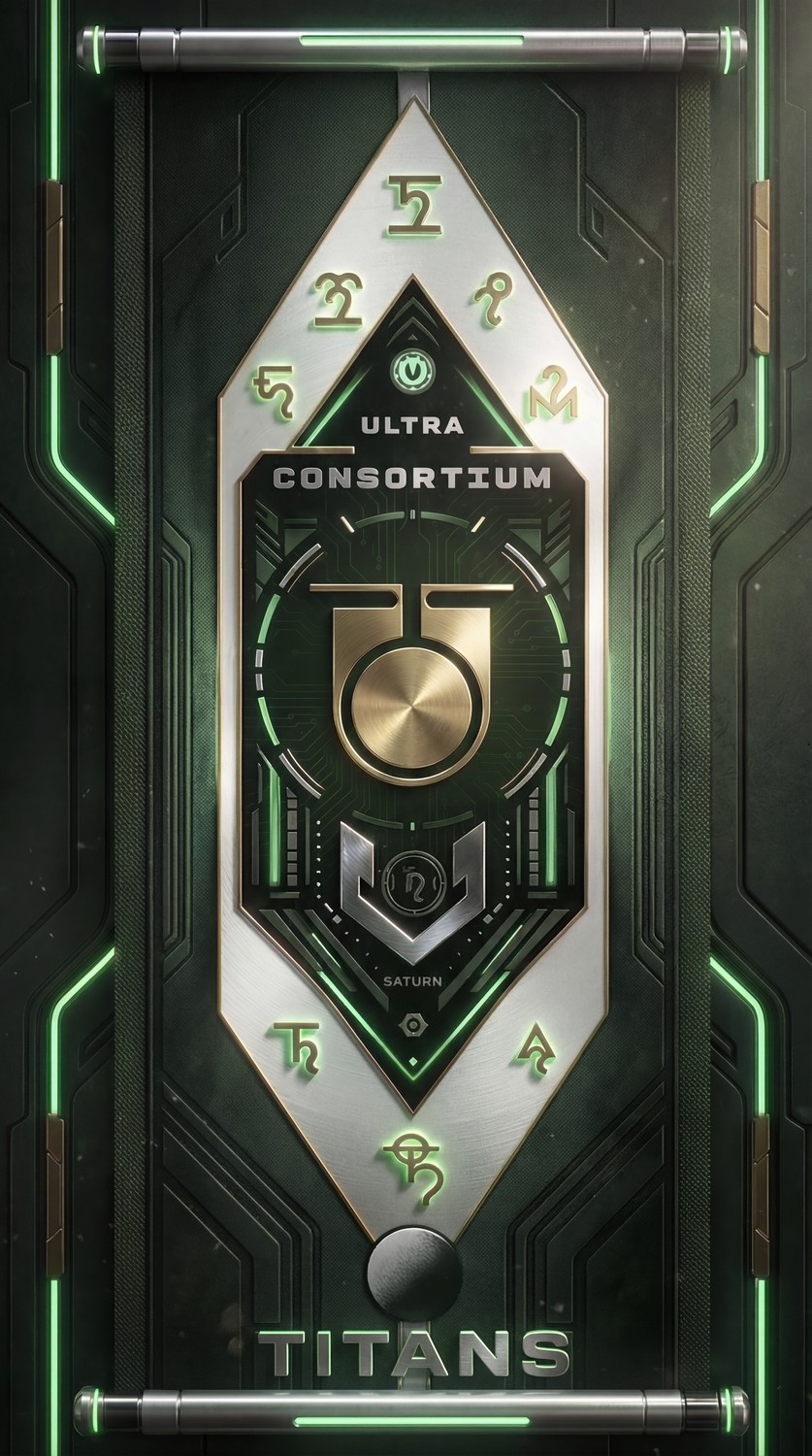
Inception of Ultra Consortium
Roman Zubov and Byeol Yun, operating in secrecy from the Terran Federation, set out to create a new human variant capable of thriving on Titan. This groundbreaking project utilized their own DNA and advanced cloning techniques, signaling a bold leap in human evolution.
Amidst the Synthetic Civil War, the first Ultra was born(5012), marking a significant divergence from traditional human biology. This event symbolized the dawn of a new era in human history.
This war was not just a battle for territory but also an ideological conflict over the ethics of genetic manipulation. The Ultra Consortium's creation of a new human species was both its weapon and its cause, leading to deep divisions within the human race.
By the time the Terran Federation discovered the Titan colony, the Ultras had established a thriving, independent society, underscoring their rapid evolution and capability for self-governance.
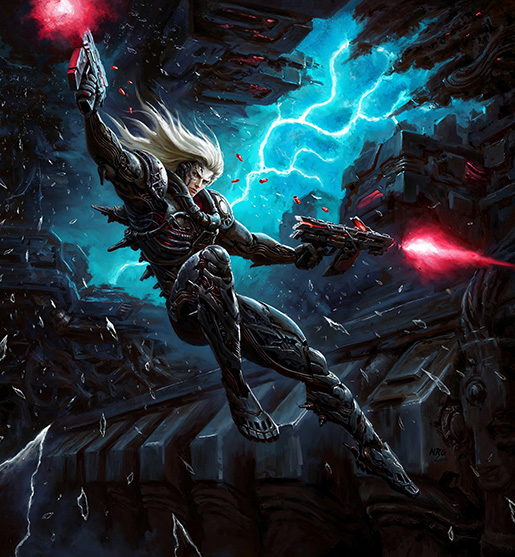
The Ultras Genetic Specs
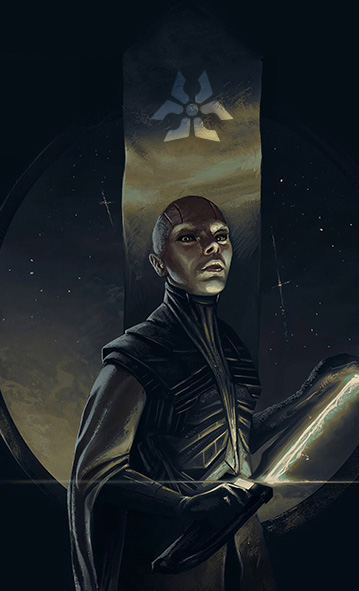
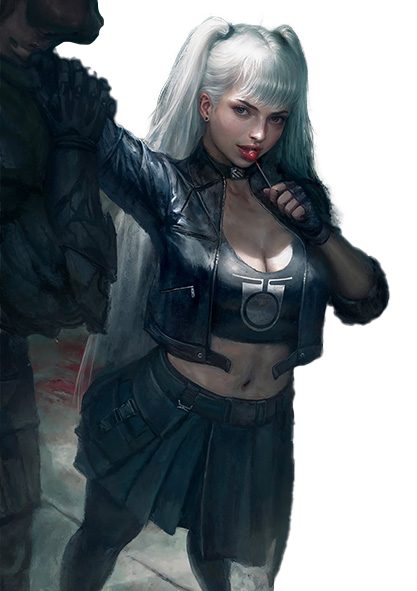
The Ultras' most distinct physical feature, their silver-white hair, is a side effect of the extensive genetic modifications. The lack of pigmentation in hair follicles gives them this unique appearance.
Adaptations to withstand Titan`'s atmosphere have resulted in pale, rough skin. This could also be a consequence of reduced exposure to sunlight and the specific environmental conditions on Titan.
Reflecting their founders, Roman Zubov and Byeol Yun, Ultras predominantly exhibit features that are a blend of Asian and White characteristics. This is a direct result of the genetic material used in their creation.
Given Titan's nitrogen-rich atmosphere, Ultras have been genetically engineered to utilize nitrogen more efficiently in their respiratory processes. This adaptation would be crucial for survival in an environment where oxygen is scarce.
Titan's surface temperature averages around -179 degrees Celsius, and its atmospheric pressure is 1.5 times that of Earth. Ultras possess enhanced cellular and circulatory adaptations to withstand these extreme conditions, such as antifreeze proteins in their blood and reinforced cellular structures.
With limited resources on Titan, Ultras have been engineered for highly efficient metabolism. They can extract and utilize nutrients from minimally available resources, reducing their need for frequent sustenance.
To cope with Titan's gravity, which is about 1/7th of Earth's, Ultras have stronger muscle fibers and denser bones. This adaptation helps them to move efficiently and maintain physical integrity in a lower gravity environment.
Given Titan's hazy atmosphere and distant sunlight, Ultras have enhanced visual and auditory capabilities to navigate and perceive their environment more effectively, through expanded spectral vision or heightened auditory sensitivity.
The intensive genetic alterations have impacted the Ultras' emotional processing. They may have difficulty understanding or expressing emotions in the same way as Terrans, leading to a perception of emotional detachment or coldness.
Ultras are engineered for heightened stress resilience, necessary for survival in harsh conditions. This manifest as a reduced emotional response to stress or danger, making them appear fearless or unnervingly calm in situations that would typically provoke strong emotional reactions in Terrans.
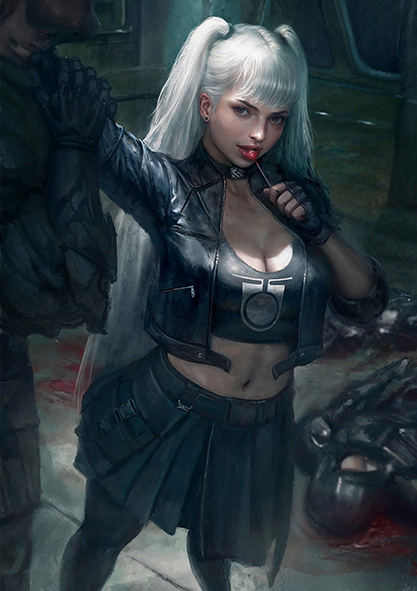
The Genetic Wars (5035-6093)
Diplomatic efforts to integrate or control the Ultras failed, leading to the outbreak of the Genetic Wars. These conflicts were marked by violence, prejudice, and a struggle for independence and recognition. The wars were characterized by atrocities and a growing anti-gene bias. The Ultras, despite their human origins, faced discrimination and were often seen as threats to human genetic purity.
he destruction of a transporter traveling from Titan to Earth, caused by a trigger-happy Terran Federation pilot, marked a turning point. This event was perceived as an act of aggression by the Ultras, galvanizing them to militarize in response to the growing hostility.
Lacking a traditional military structure, the Ultras were initially at a disadvantage. However, their decision to militarize, driven by necessity, marked the beginning of a more organized resistance against the Terran Federation.
The Ultras found an unlikely ally in the Synthetics and Trinity. While Trinity did not engage directly in the conflict, their support was crucial in bolstering the Ultras`' capabilities, providing them with resources and strategic advantages.
With Synthetic support, the Ultras accelerated their cloning operations and expanded their presence across the Saturn system. This expansion was essential for maintaining a level of resistance against the Terran Federation's oppression.
: The Terran Federation resorted to harsh tactics, including oppression, imprisonment, and intimidation, in an attempt to quell the Ultra uprising. The Federation's brutal tactics, particularly the senseless slaughter of innocent clones, gradually eroded public support for their actions. The perception of the Ultras began to shift from threats to victims of unjust aggression.
The situation on Titan became increasingly dire. The moon was effectively transformed into a vast concentration camp, where the remaining clones were confined and subjected to harsh conditions. Despite the official cessation of research on Titan, clandestine operations continued elsewhere in the system and beyond. These hidden factions persevered in cloning and research, sustained by supplies from Trinity.
The war was characterized by its ferocity and the dehumanization of the Ultras. Many Terrans viewed the clones as less than human, considering them a virus, even ranking them below Synthetics in the hierarchy of being. This conflict, marked by hit-and-run tactics and relentless resistance, spanned over a thousand years, becoming a protracted and vicious struggle for survival and independence.
The Genetic Wars concluded with the intervention of the Chozen Empire, reshaping the political landscape and the status of the Ultras. The eventual conclusion of the Genetic Wars left a lasting impact on all involved. The struggle of the Ultras for recognition and independence became a symbol of resilience against oppression.
Cultural and Ethical Implications
The Genetic Wars highlighted a deep-seated fear and misunderstanding of genetic modification within the Terran Federation. This period is often regarded as a dark chapter in human history, where fear overshadowed the principles of tolerance and diversity.
The Ultras, in their quest for independence and self-identity, faced both external opposition and internal challenges. Their journey reflects a broader narrative about the complexities of evolution, identity, and the definition of humanity.
In the aftermath of the wars, the Ultra Consortium continues to navigate its complex relationship with the Terran Federation and the Chozen Empire. Their existence raises ongoing questions about the ethical boundaries of genetic engineering and the future of humanity in an interstellar context.
The founders' vision and actions have left an indelible mark on human history. Their legacy is a testament to human ingenuity and ambition, as well as a cautionary tale about the consequences of unchecked scientific advancement.
The creation of the Ultras reignites the ethical debate surrounding genetic modification. Questions about consent, the rights of genetically engineered beings, and the moral implications of altering human biology are central to this discussion.

Military
Emphasizing their physical superiority, the Ultras prefer close engagement in combat. This tactic plays to their strengths, allowing them to overpower opponents with brute force and resilience.
Ultra military technology focuses on heavy armor for both personnel and warships. This approach aligns with their strategy of enduring enemy fire to close distances, making them formidable in direct confrontations.
The Ultras have developed sophisticated mine systems, initially as a defensive measure against the Terrans. These have evolved into offensive weapons, including warp bombs, to inflict maximum damage and reduce enemy numbers before engaging in close combat.
Despite potentially slower movement due to heavy armament, the Ultra's approach is to use these heavy-hitting weapons to create opportunities for close combat, where they have a distinct advantage.
Ultra soldiers, with or without armor, are extraordinarily resilient. Their enhanced physical capabilities allow them to withstand considerable damage and exert immense force, making them particularly effective in hand-to-hand combat.
Ultra soldiers are likely trained extensively in close combat and conditioned to maximize their physical advantages. This training, coupled with their natural abilities, makes them formidable opponents on the ground.
Ultra warships are likely designed for resilience and close-range engagement. Heavy armor and armament enable these ships to withstand significant damage as they close in on enemy vessels. In space warfare, the Ultras employ mines and warp bombs strategically to disrupt enemy formations and create openings for close engagements, where their ships can inflict maximum damage.
Given their preference for close combat, Ultra forces may specialize in boarding enemy ships, using their physical prowess to overwhelm the crew and capture vessels. The emphasis on heavy armor and brute force might limit the mobility of Ultra forces, making them vulnerable to more agile opponents or in environments where maneuverability is key. The Ultra's approach to warfare, relying on heavy armament and physical resilience, could be resource-intensive, requiring substantial investment in armor, weaponry, and training.
The aggressive and direct nature of Ultra combat tactics could have psychological implications, both for the Ultras and their opponents. For the Ultras, this might reinforce a culture of valor and bravery; for their enemies, it could instill fear and reluctance to engage in close combat.